Punching Bag Maintenance Guide
Punching bag maintenance comes down to four habits: wipe the shell down after sweaty sessions, rotate a hanging bag a quarter turn every few weeks so wear spreads evenly, inspect straps, chain and carabiner monthly, and check the mounting hardware is still tight every three months.
The maintenance schedule
Punching bags rarely die from being hit. They die from sweat left on the shell, straps nobody looked at, and an anchor bolt that quietly worked loose over eighteen months. All three are preventable in about ten minutes a month.
| How often | What to do | Time |
|---|---|---|
| After each session | Wipe the shell down if you sweated on it | 1 min |
| Every 2–4 weeks | Rotate a hanging bag a quarter turn | 2 min |
| Monthly | Inspect straps, chain, carabiner and stitching | 3 min |
| Every 3 months | Re-check bracket bolts and wall anchors | 5 min |
| Every 6 months | Deep clean the shell; check BOB base fill level | 15 min |
Cleaning in Singapore humidity
This matters more here than almost anywhere. Sweat left on a synthetic leather shell in 80% humidity starts to smell within days and degrades the surface finish over months. The fix is trivially easy and almost universally skipped.
- After a sweaty session: wipe the shell with a damp cloth, then dry it with a second cloth. Thirty seconds.
- Every six months: damp cloth with a little mild soap, wipe down, rinse the cloth, wipe again to remove residue, then dry thoroughly.
- Never: soak the bag, hose it down, or use solvent-based cleaners. Water that gets into the filling will not come out, and a damp core is the end of the bag.
- If the room is humid: a fan running for an hour after a session does more for the bag's lifespan than any cleaning product.
Moisture that reaches the filling has no way out. It causes odour you cannot remove and, over time, uneven compaction as the core dries unevenly.
Rotating a hanging bag
You hit the same face of the bag every session — the one facing where you stand. Over a year that side takes tens of thousands of impacts while the opposite side takes almost none.
Two things follow. The shell wears through on one face first, and the filling compacts unevenly, producing a hard patch exactly where you keep hitting.
The fix is a quarter turn every few weeks. Unclip the carabiner, rotate the bag 90°, clip it back. Two minutes, and it roughly doubles the useful life of the shell while keeping the filling density even across the circumference.
Inspecting straps and hardware
This is the safety-critical item on the list. A bag that comes off its mount mid-session is genuinely dangerous, and it never happens without warning — the warning is just usually unread.
Monthly checks
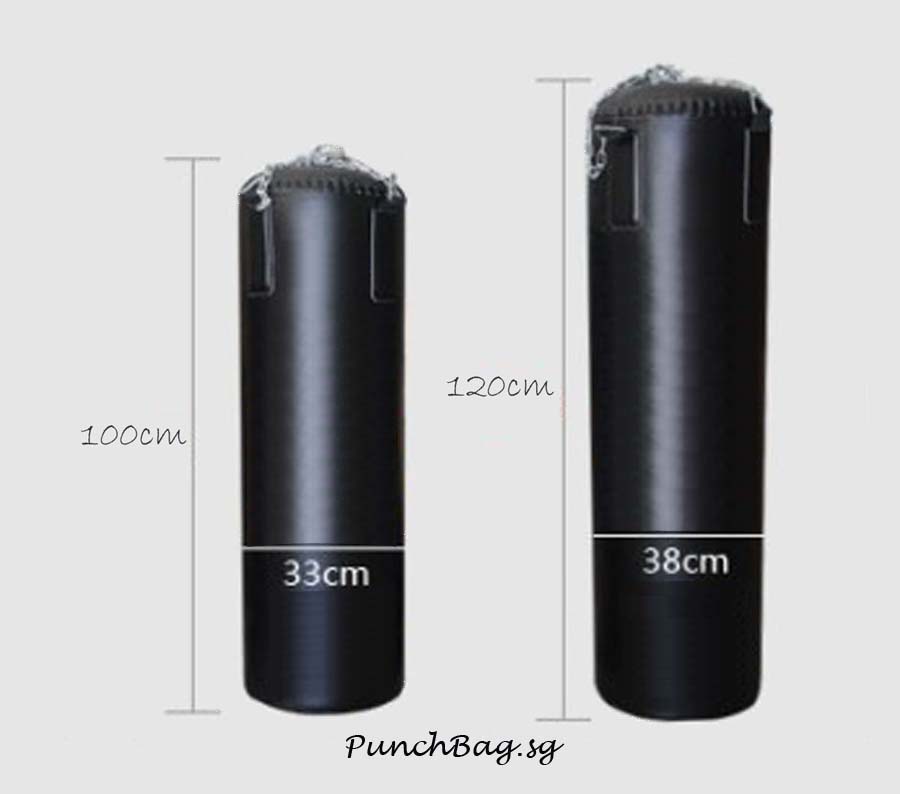
- Top strap stitching. Look for fraying, loose thread ends or any stitch line that has started to pull. This is where a bag fails first, essentially always.
- D-ring. Should be circular. Any elongation means it has been deforming under load.
- Chain links. Same test — links should be closed and round, not stretched into ovals.
- Carabiner. The gate should close cleanly and the screw gate should turn freely. A gate that no longer seats is a carabiner to replace, not to persevere with.
- Swivel. Should rotate freely. A seized swivel means the chain is winding instead, which twists the straps.
Quarterly checks
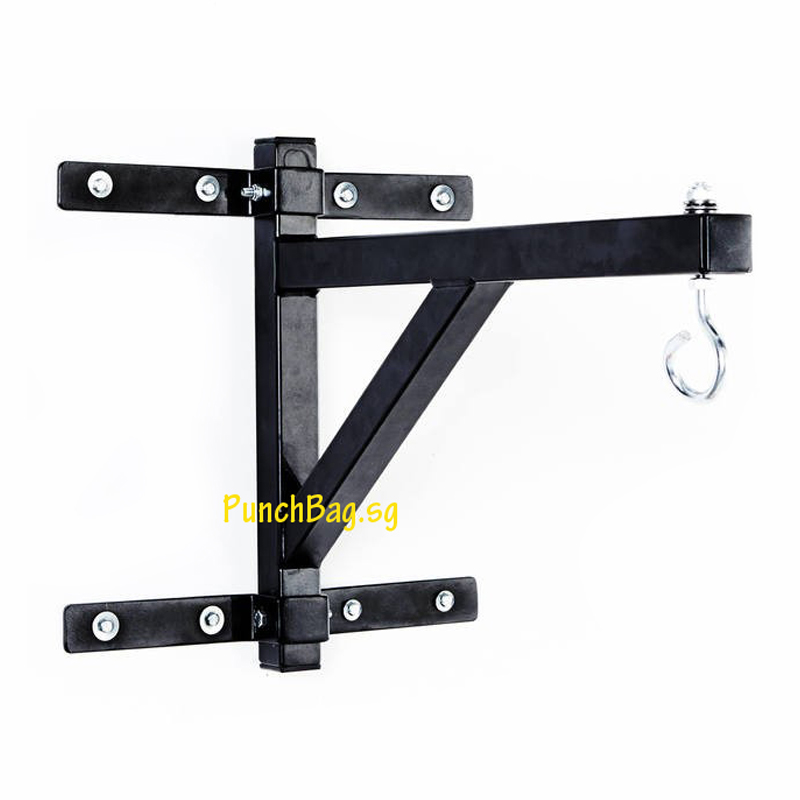
- Bracket bolts. Put a socket on each one. Any movement before it bites means it has worked loose — re-torque it.
- Wall anchors. Look for fine cracks in the wall around each anchor, or dust accumulating below them. Either means the anchor is moving in its hole, and that needs attention immediately.
- Bracket alignment. The bracket should still sit flat against the wall. A visible gap on one side means something has shifted.
If you find anything on the quarterly list, stop using the bag until it is resolved. Our installation guide covers correct anchoring, and a replacement bracket costs a great deal less than a wall repair.
Looking after a BOB base
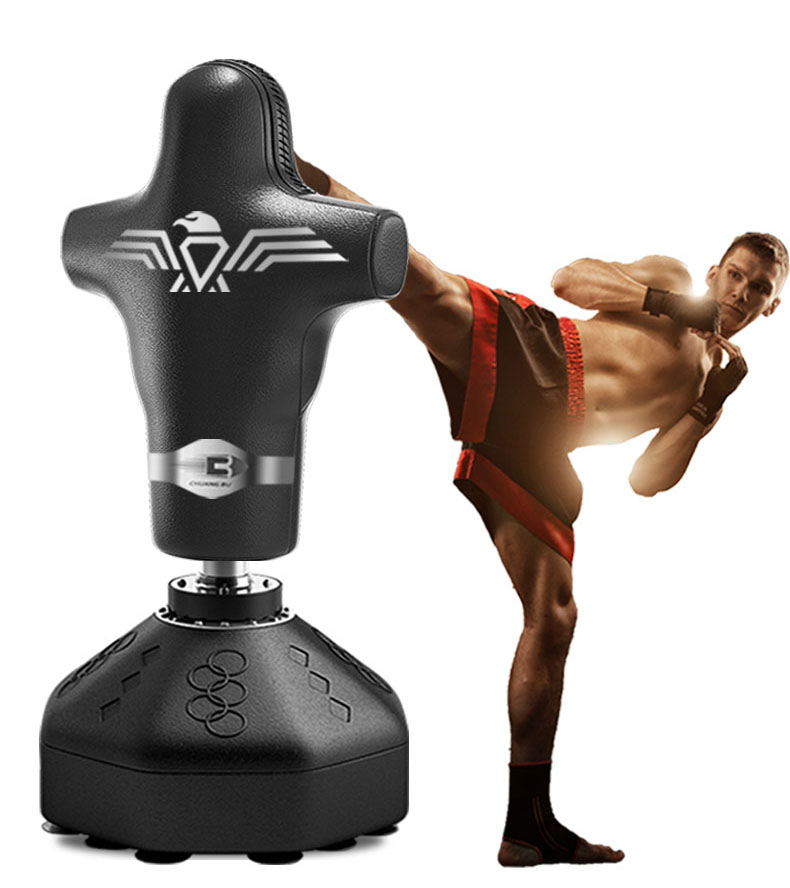
The standing bag has different failure points, and none of them involve straps.
- Check the fill level every six months. Water bases lose a little to evaporation through the cap seal over time. An underfilled base is the single most common cause of a bag that creeps across the floor during hard combinations.
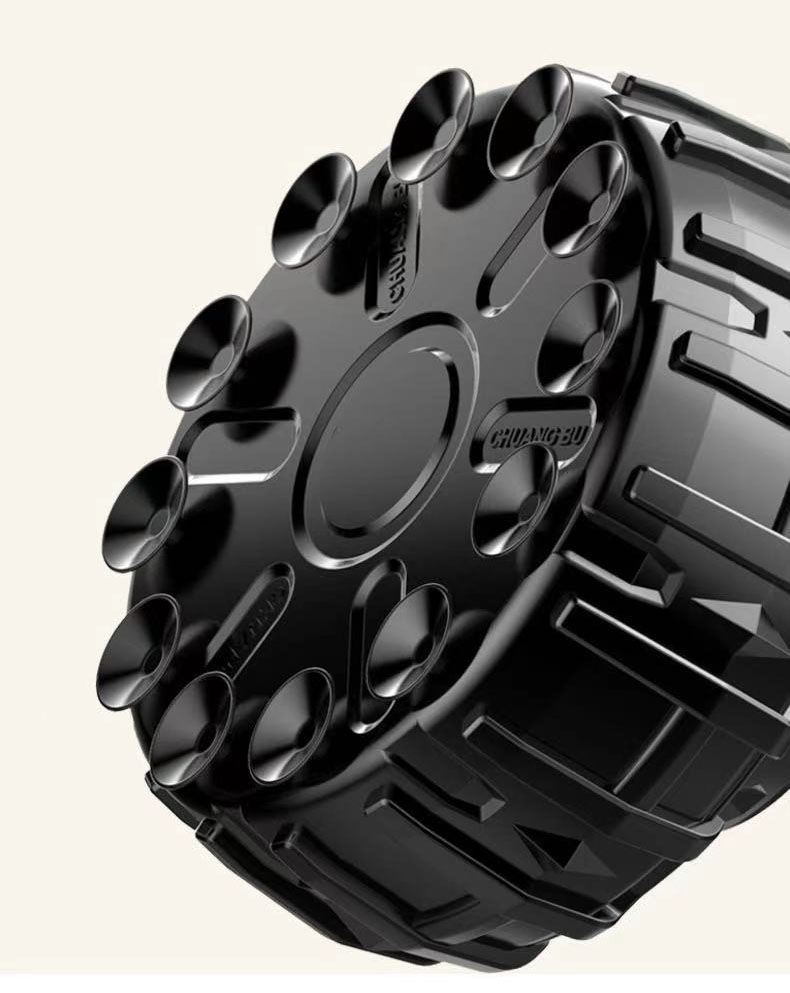
- Clean the suction pads. Dust and grit under the pads stop them sealing. Tip the base, wipe the pads with a damp cloth, let them dry, and set it back down on a clean floor.
- Inspect the spring column annually. It should return the torso to centre cleanly with no grinding or lateral play. The spring is the one genuine wear item on a BOB.
- Wipe the foam torso down like any other bag shell. The moulded foam picks up sweat and body oils, particularly around the chest and jaw.
- If you fill with water and plan to leave it for months, a small amount of chlorine tablet prevents anything growing in there.
When to replace it
Three signals, two of them safety issues:
- Stitching at the top straps has started to pull. Stop using the bag. This is the failure mode that drops a bag on someone.
- The shell has split. Filling will begin to escape and the density will go uneven fast. A small split can sometimes be patched; a seam that has opened cannot.
- The filling has compacted into a hard core. Not dangerous, just a poor training tool — and hard on your wrists. If the bag has stopped giving at all on impact, it has done its time.
A well-made filled bag used two or three times a week, cleaned, rotated and inspected, will comfortably last several years. Almost all early failures trace back to one of three things: moisture in the filling, a bag never rotated, or hardware nobody checked.
Send us a photo. We would rather look at a picture of a suspect strap than hear about a bag that came down. If the bag is new, our 7-day warranty covers stitching and seam defects — and either way we would rather advise you than have you guess.
Call +65 6372 1581, email hello@punchbag.sg, or come to the showroom and ask in person. We would rather talk you out of the wrong bag than sell you one.