Beginner Heavy Bag Workout: 6 Rounds
A good beginner heavy bag workout runs six three-minute rounds with one minute of rest: one warm-up round, two technique rounds on single punches, two combination rounds, and one conditioning round. Total time is about 25 minutes. Pace yourself at roughly 60% power — technique collapses long before your lungs do.
Before round one
Three things, none optional.
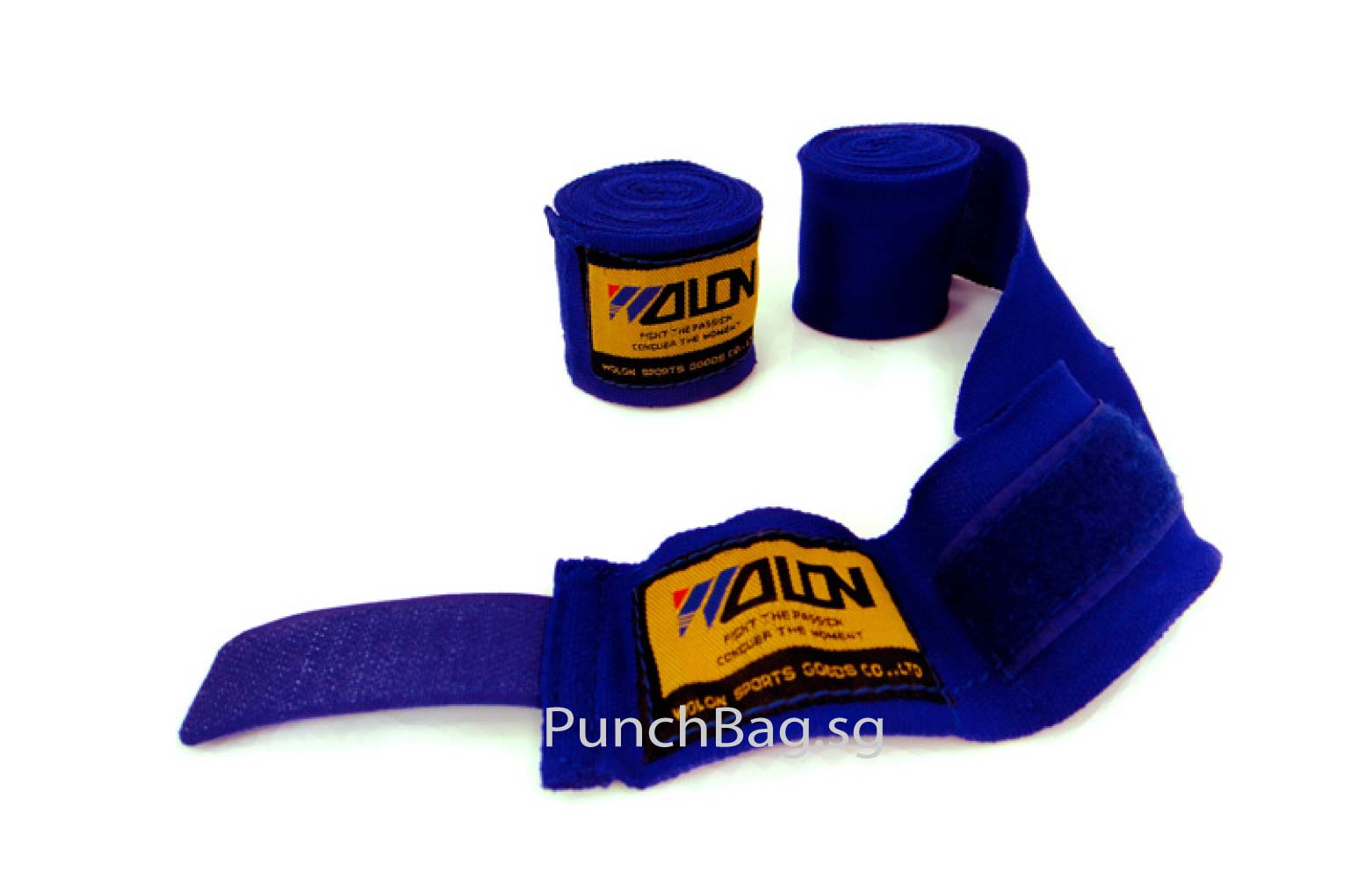
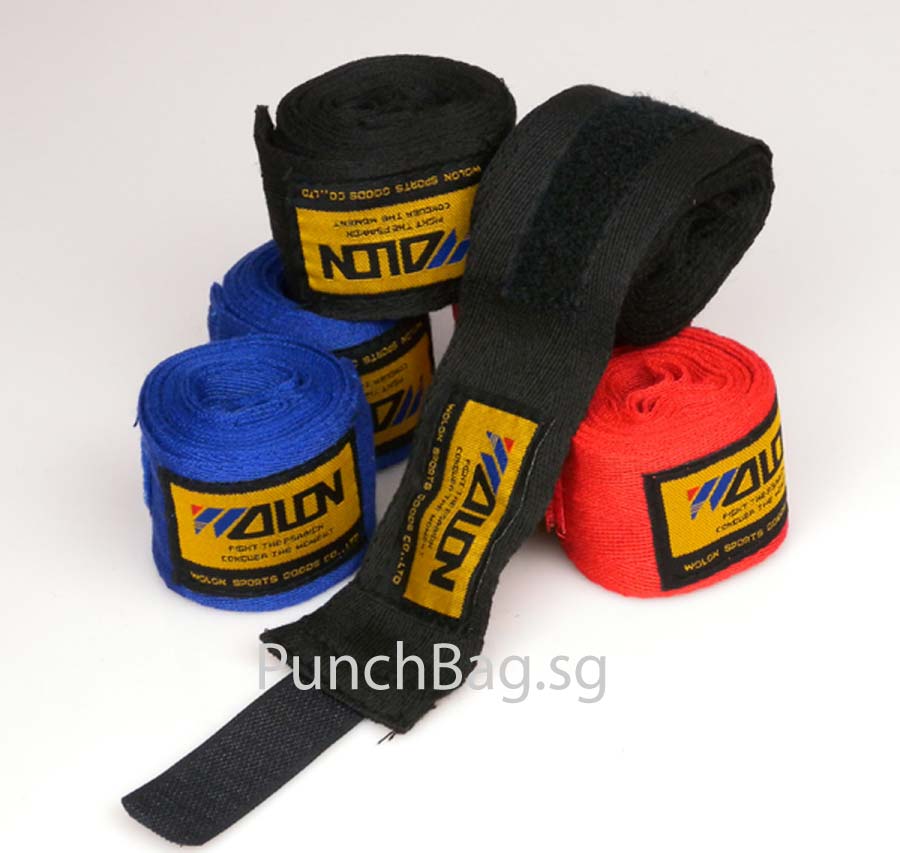
- Wrap your hands. Two minutes a hand. If you are not sure how, the step-by-step guide covers it. Skipping this is the single most common reason beginners end up resting a sore wrist for a fortnight.
- Put gloves on. Wraps hold your hand together; gloves save your skin and spread the impact. You want both.
- Set a round timer. Three minutes work, one minute rest. Any phone app does it. Training by feel means you stop when it gets hard, which is exactly the wrong moment.
The six rounds
Twenty-four minutes of clock time, about twenty-five with setup. Do this two or three times a week with a rest day between.
Round 1 — Warm-up (light)
Move around the bag. Light jabs only, at maybe 30% power. Roll your shoulders, bounce on your feet, get your hands used to contact. You are raising your body temperature and waking up the joints, not training. Resist the urge to start hitting properly — this round exists to make the other five safe.
Round 2 — Jab and cross
Just the two punches, thrown one at a time with a reset between each. Full extension, then bring the hand straight back to your chin. Watch that your wrist stays flat and in line with your forearm at the moment of contact. This round is about repetition quality, not volume — around 60 punches is plenty.
Round 3 — Hooks and body shots
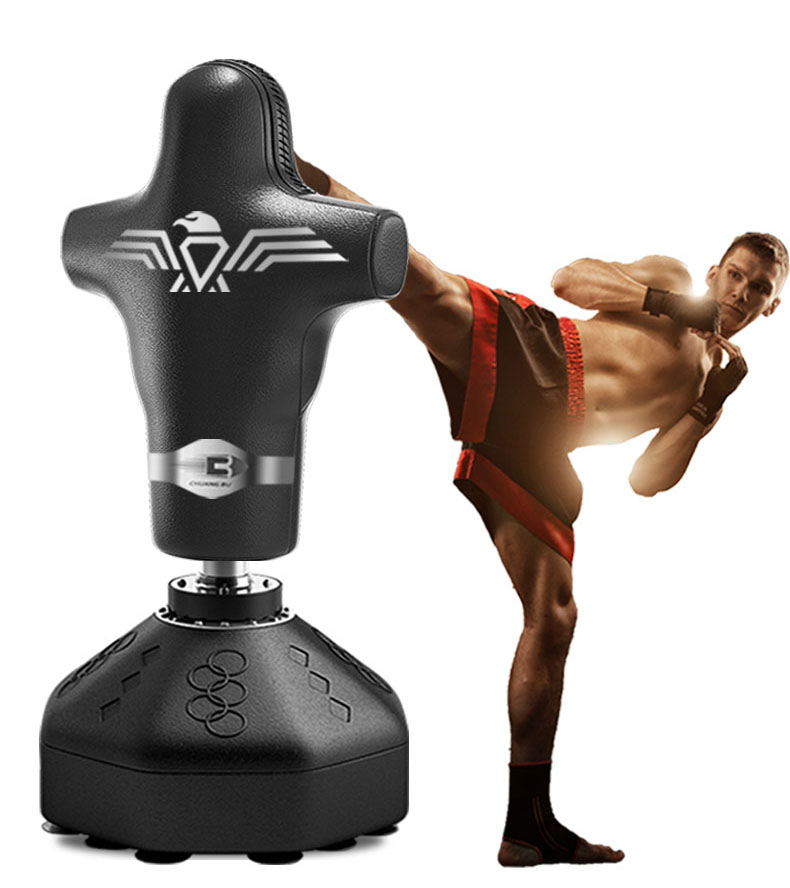
Lead hook to the head, rear hook to the body, one at a time. Hooks are where beginners most often bend the wrist, so go slower than feels natural and check the alignment. On a BOB standing bag aim the body shots at the solar plexus and the floating ribs — the form gives you actual landmarks, which a cylindrical bag cannot.
Round 4 — Two-punch combinations
Jab–cross. Cross–hook. Jab–body. Throw each combination, then move. The moving is the point: hit, step out, re-enter. On a hanging bag you have no choice, because the bag comes back at you. On a standing bag you have to impose it on yourself deliberately.
Round 5 — Three-punch combinations
Jab–cross–hook is the classic and it is enough. Throw it at 70% and focus on the rhythm — the three punches should flow as one motion, not three separate efforts. When you get tired the third punch is the one that falls apart first; that is your signal to slow down rather than push through.
Round 6 — Conditioning finisher
Continuous punching at moderate power for the full three minutes. No combinations to think about, no technique to police — just keep the hands moving. This is the only round where you are training your lungs rather than your hands. If your form collapses badly, stop and finish the round on light jabs.
| Round | Focus | Effort |
|---|---|---|
| 1 | Warm-up, movement, light jabs | 30% |
| 2 | Jab and cross, single punches | 60% |
| 3 | Hooks and body shots | 60% |
| 4 | Two-punch combinations | 65% |
| 5 | Three-punch combinations | 70% |
| 6 | Continuous conditioning | 75% |
Pacing: the part beginners get wrong
Almost everyone starts too hard. Three minutes sounds like nothing until you are ninety seconds into round two with your shoulders burning and your hands dropping.
Work at around 60% for most of the session. This is not laziness — it is the level at which your technique stays intact, and technique repeated correctly is the entire point of bag work. A thousand sloppy punches thrown at full effort teach your body to throw sloppy punches.
Your lungs recover in minutes. Your wrists and knuckles take days. Pace for the tissue that recovers slowest, not the one that complains loudest.
The four punches you need
- Jab — lead hand, straight out and straight back. Your range-finder and your most-used punch.
- Cross — rear hand, straight, rotating through the hip and back foot. This is where your power comes from, and it comes from the ground, not the arm.
- Hook — either hand, elbow at roughly 90°, turning through the body. The punch most likely to hurt you if the wrist is not flat.
- Body shot — any of the above, aimed at the ribs and solar plexus. Bend at the knees to get down to it rather than dropping your hands.
That is a complete toolkit for months of productive training. Uppercuts, overhands and everything else can wait until these four are automatic.
Progressing over eight weeks
| Weeks | Sessions per week | What changes |
|---|---|---|
| 1–2 | 2 | Six rounds as written. Focus entirely on wrist alignment. |
| 3–4 | 2–3 | Same six rounds, slightly more power in rounds 4–6. |
| 5–6 | 3 | Add a seventh round. Shorten rests to 45 seconds. |
| 7–8 | 3 | Eight rounds, 45-second rests. Add uppercuts to round 5. |
Add rounds before you add power. More time at good technique beats less time at maximum effort, particularly in the first couple of months while your hands are still adapting to impact.
Not "push through it" — stop. Wrist pain during bag work means either your wraps are wrong or your alignment is, and both get worse with repetition. Sore knuckles after a first session are normal; sore joints are not.
Call +65 6372 1581, email hello@punchbag.sg, or come to the showroom and ask in person. We would rather talk you out of the wrong bag than sell you one.